One of the great joys of living on the opposite side of the world is discovering that things you assumed were universal are, in fact, not universal at all.
Take grocery shopping.
Back in America, grocery shopping generally involves a shopping cart, a parking lot, and at least one person blocking the entire aisle while comparing seventeen varieties of pasta sauce.
Thailand, naturally, looked at this system and said, “Or… we could do it in boats.”
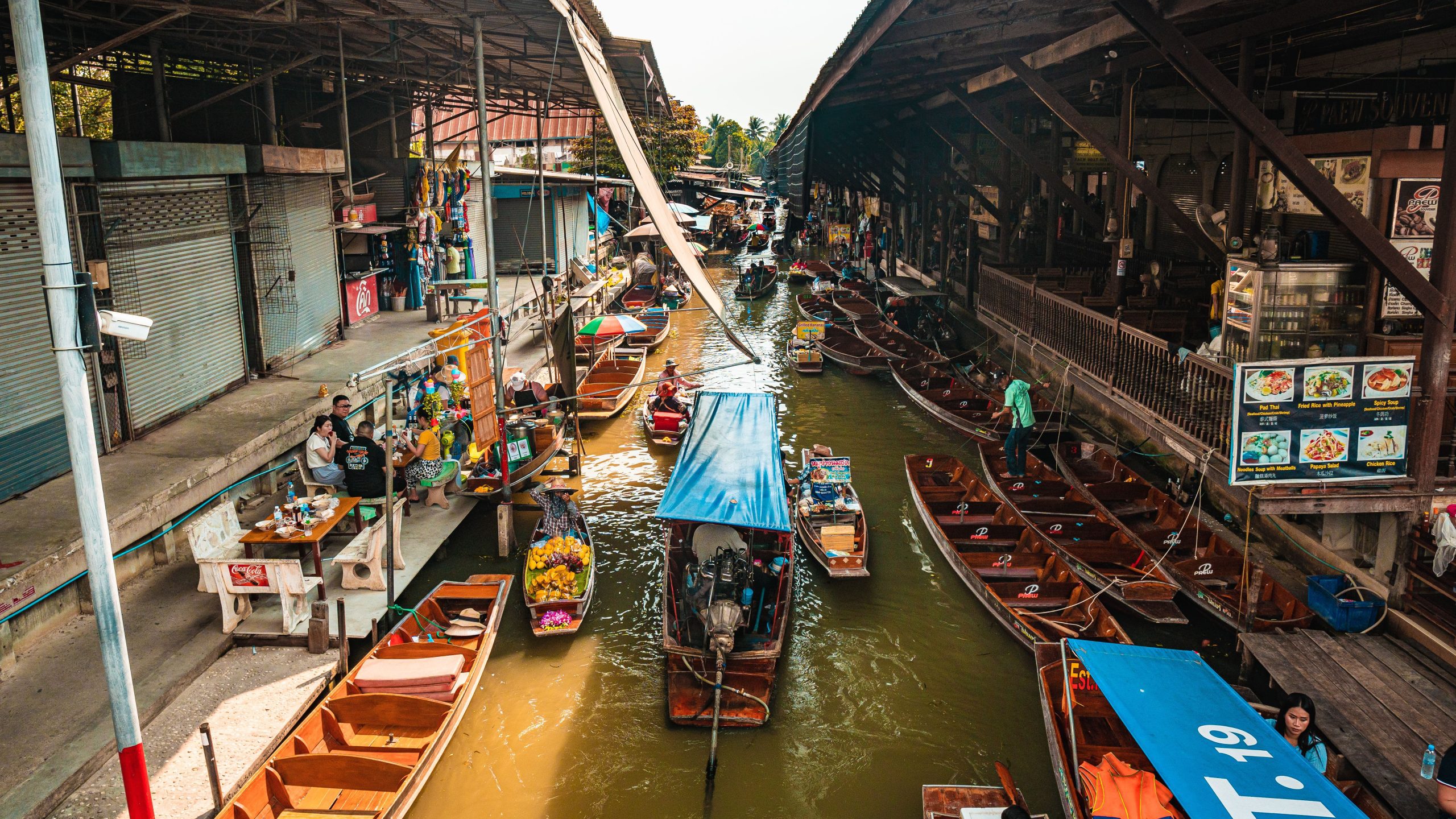
One of my first excursions after arriving in Thailand was a visit to one of the country’s famous floating markets, located just outside Bangkok.
Now, if you’ve never experienced a floating market before, picture this:
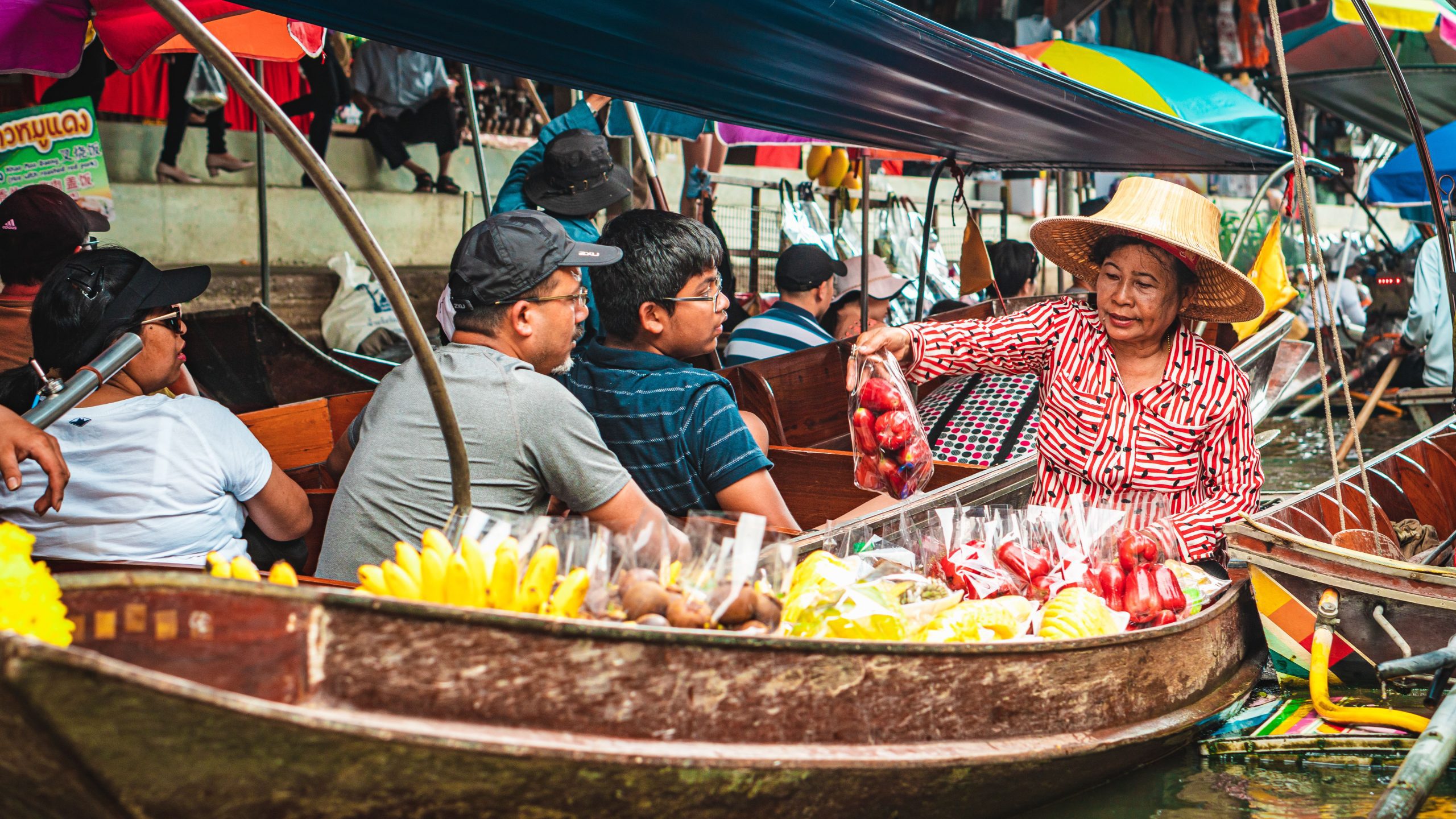
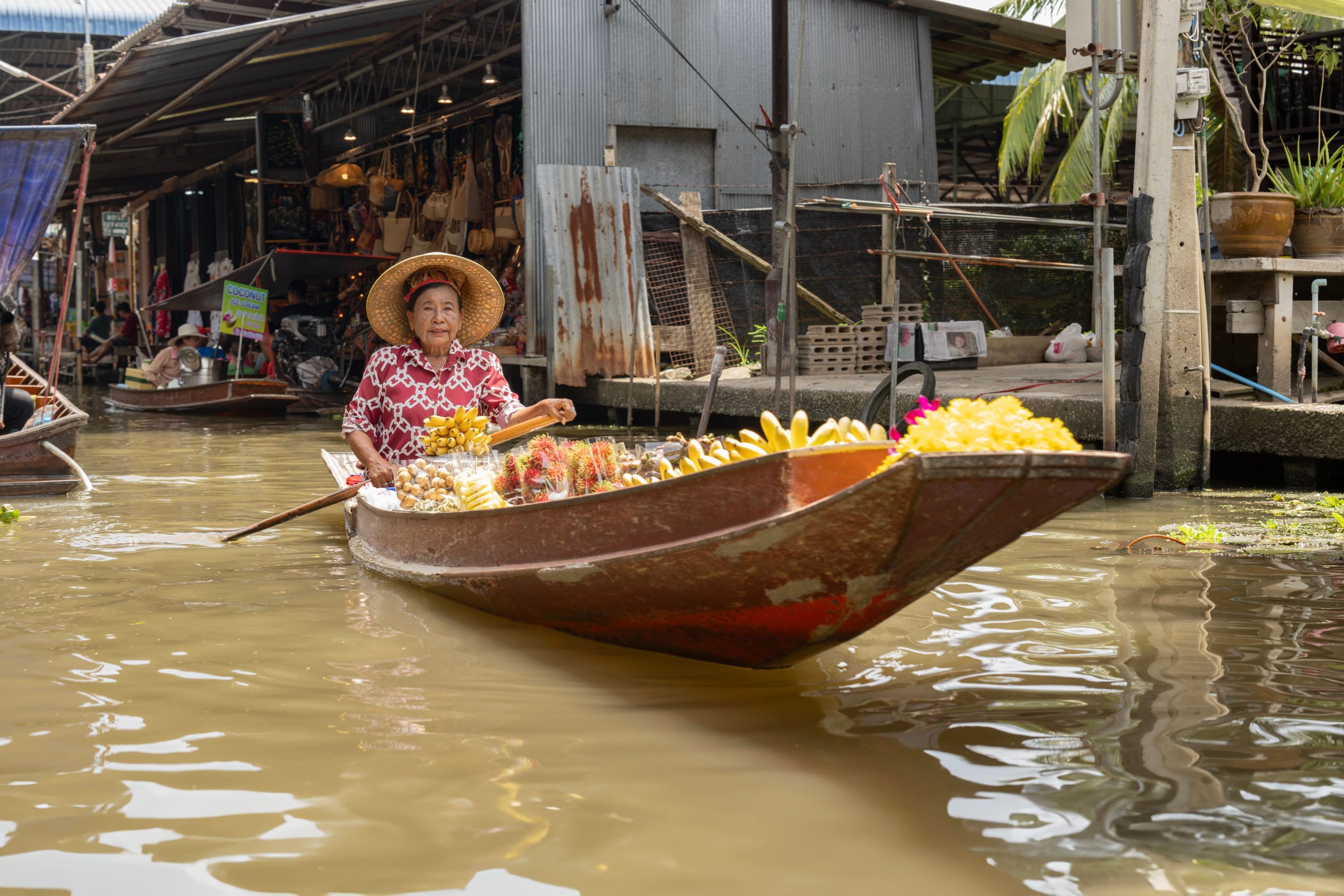
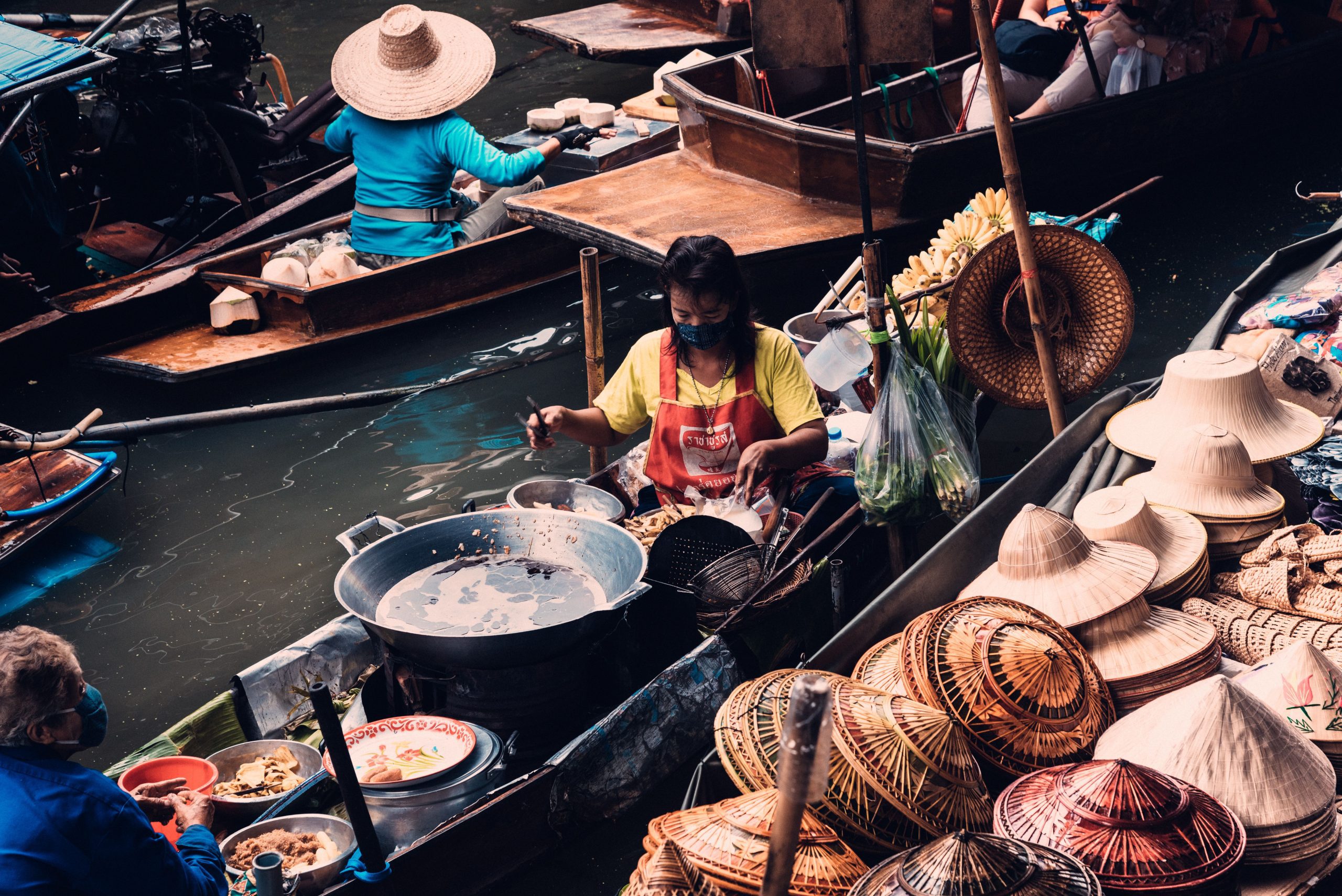
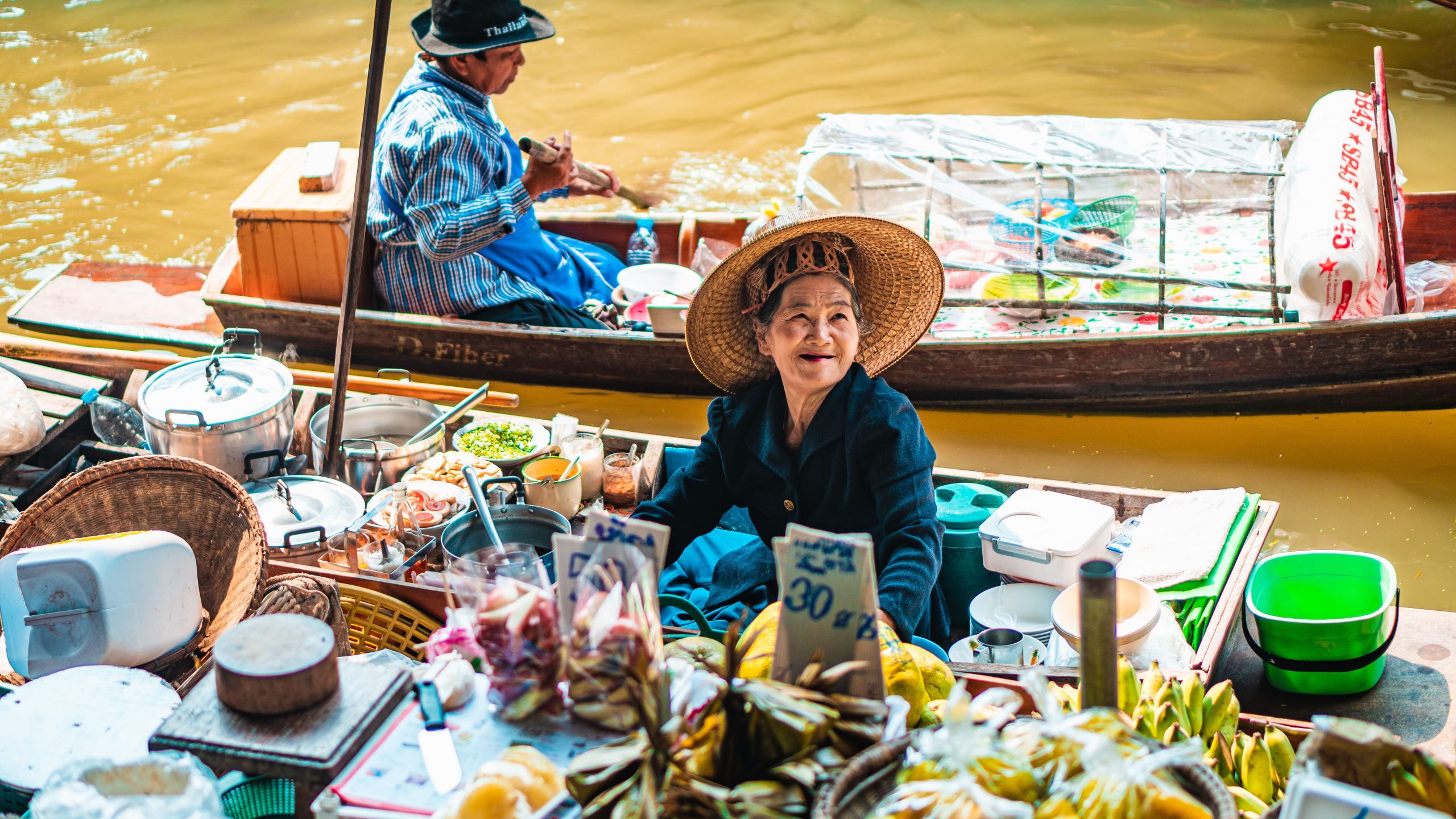
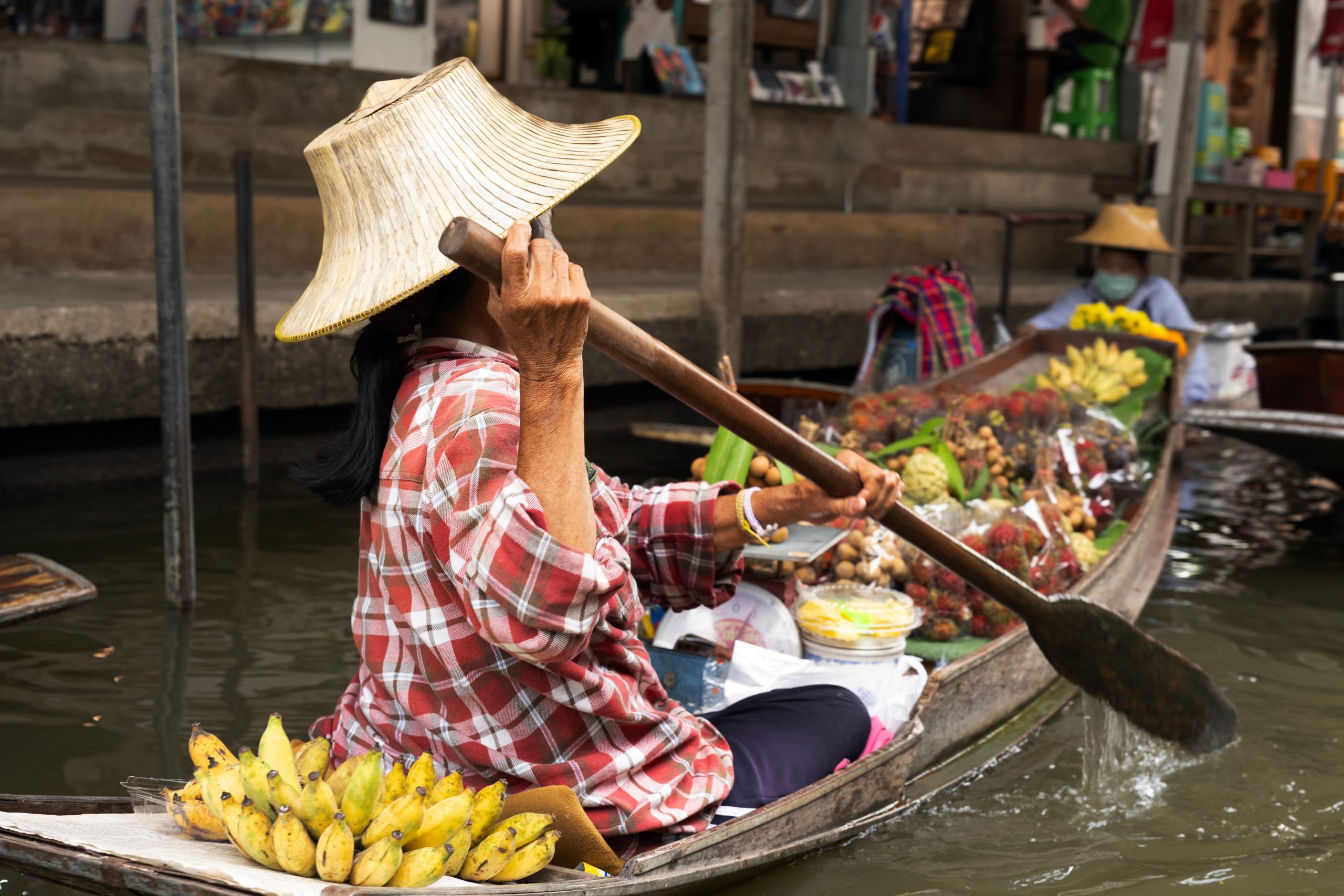
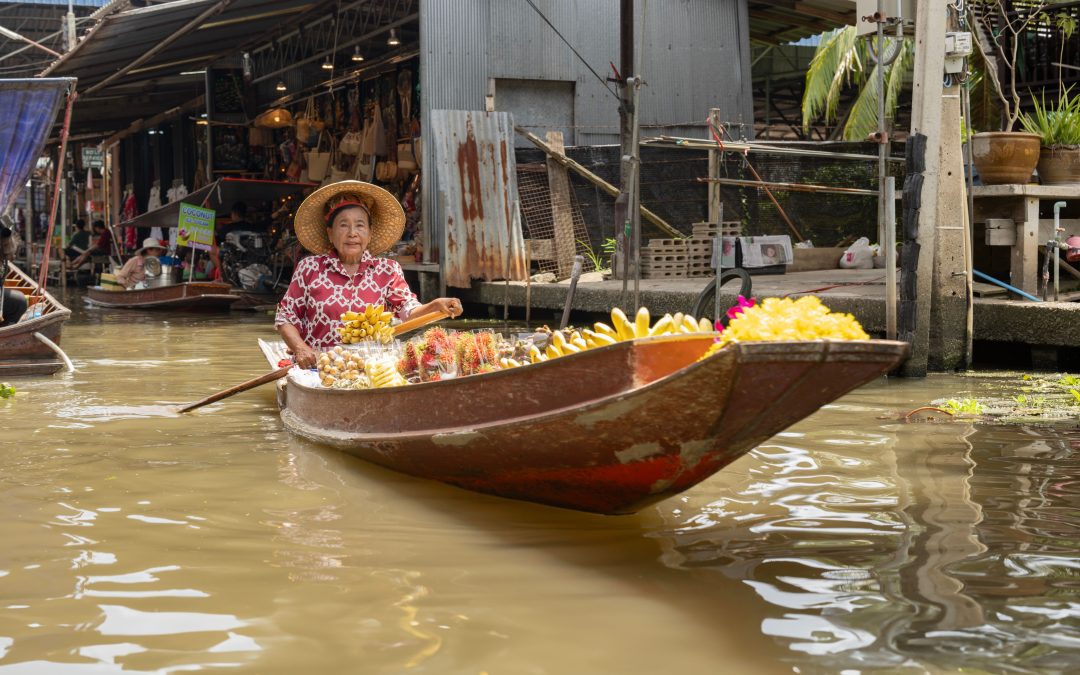
A maze of narrow canals. Wooden boats gliding past one another. Vendors in wide-brimmed hats selling everything from tropical fruit and handmade souvenirs to sizzling noodles and grilled seafood.
It’s less like visiting a supermarket and more like wandering through a moving postcard.
The moment you arrive, your senses go to work.
The aroma of charcoal-grilled shrimp drifts across the water. Fresh coconuts are piled high in boats. The scent of jasmine mingles with spices and woodsmoke. Every few seconds another vendor paddles by offering something that looks absolutely delicious, whether you know what it is or not.
One of the things I love most is that the market feels wonderfully backward—in the best possible way.
Instead of pushing a cart through endless aisles searching for what you need, the merchants come floating directly to you.
Hungry? A vendor appears with a steaming bowl of noodles.
Need dessert? Here comes another boat with coconut ice cream.
Still hungry? Excellent. Thailand has anticipated this possibility.
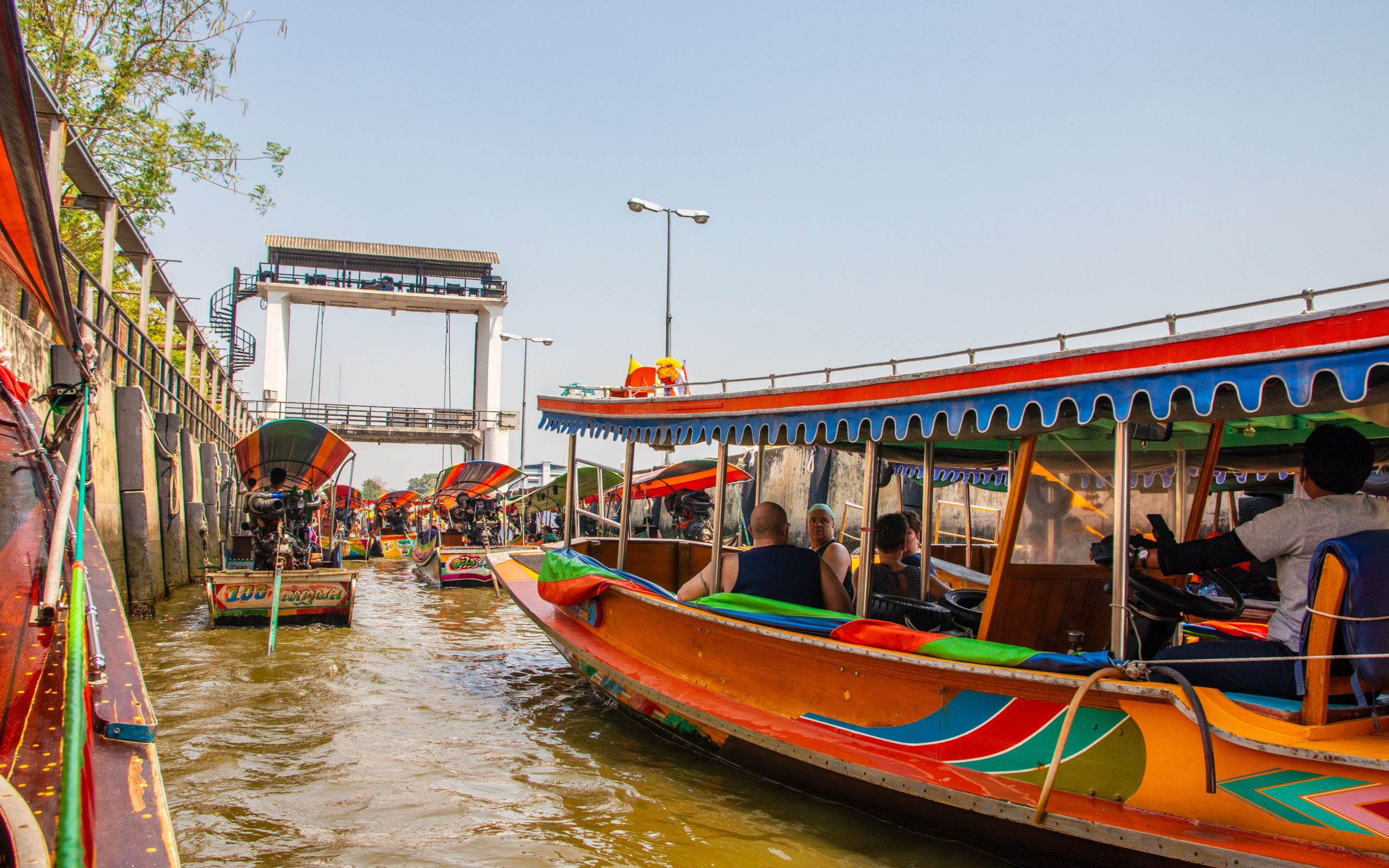
The canals can become surprisingly crowded, particularly during peak hours. Boats squeeze through gaps that seem physically impossible. Vendors maneuver with the confidence of Formula One drivers. Somehow, despite the apparent chaos, everyone keeps moving.
Mostly.
I spent a good deal of my time simply people-watching. Between the vendors calling out their offerings, tourists snapping photos, and locals going about their daily routines, there’s never a dull moment.
Yet some of my favorite sights weren’t actually inside the market itself.
Beyond the busiest sections of canal, traditional wooden homes stand on stilts above the water. Children wave from porches. Small gardens spill toward the canal banks. Life moves at a gentler pace, offering a glimpse of Thailand as it existed long before shopping malls, expressways, and air-conditioned supermarkets arrived on the scene.
For centuries, canals were Thailand’s highways. They connected communities, transported goods, and formed the backbone of everyday commerce. While many have since given way to modern roads, floating markets preserve a piece of that history.
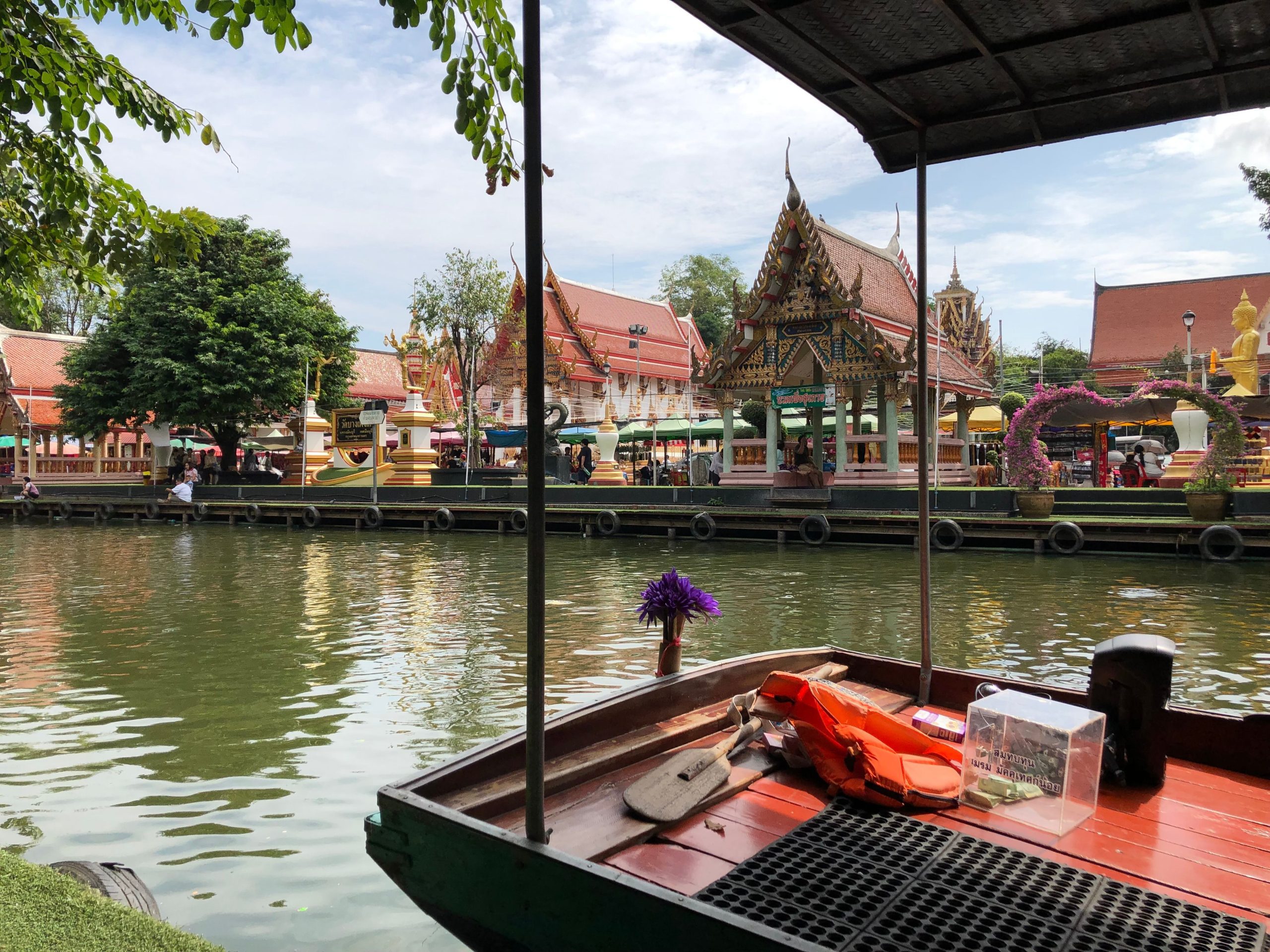
Today, several excellent floating markets can be visited within easy reach of Bangkok, including the famous Damnoen Saduak Floating Market, the local favorite Taling Chan Floating Market, and Bang Nam Phueng Floating Market, which sits surprisingly close to the capital’s modern skyline.
If you decide to visit, a few tips:
Arrive early before both the heat and the tour buses arrive.
Bring cash – Thai baht, preferably smaller denominations.
And if possible, hire a private longtail boat. Drifting through the canals at your own pace is half the fun.
Most importantly, come hungry.
Trust me on this.
Because somewhere out there, just around the next bend in the canal, a smiling vendor is paddling toward you with something delicious.
And unlike at the supermarket back home, there’s a very good chance your lunch will arrive before you do.
Until next time.
Cleanup on aisle 7, we have an overturned canoe.