When I moved to Thailand seven months ago, I considered myself somewhat of a Thai food aficionado. Back home, I had a punch-card for the local “Thai Bloom” restaurant and could successfully order Pad Thai without mispronouncing it too badly. I assumed I was prepared.
I was not prepared.
But my real surprise? Learning that some of the most iconic “Thai” flavors didn’t even start here.
Noodles? Chinese.
Thailand’s famous Royal Gold desserts? A historical mashup with a French-Portuguese twist.
Even the country’s legendary Thai Bird’s Eye Chili was not native to the Land of Smiles. You read right. The very thing that has caused my mouth endless discomfort and soaked a countless number of linen shirts was an immigrant.
The list goes on and on.
So, grab a tall glass of ice water. Some of these stories get rather spicy.
Busting a Few Myths – It’s Not All Homegrown
As I mentioned, some of the tastiest, most popular Thai dishes did not originate in Thailand. No sir. Some of my personal favorites date back hundreds of years and owe their origin to European and Indian spice traders, Chinese merchants, and even chaos in the royal palace.
Here are a few to whet your appetite:
Massaman Curry: When East Meets West in the Kitchen
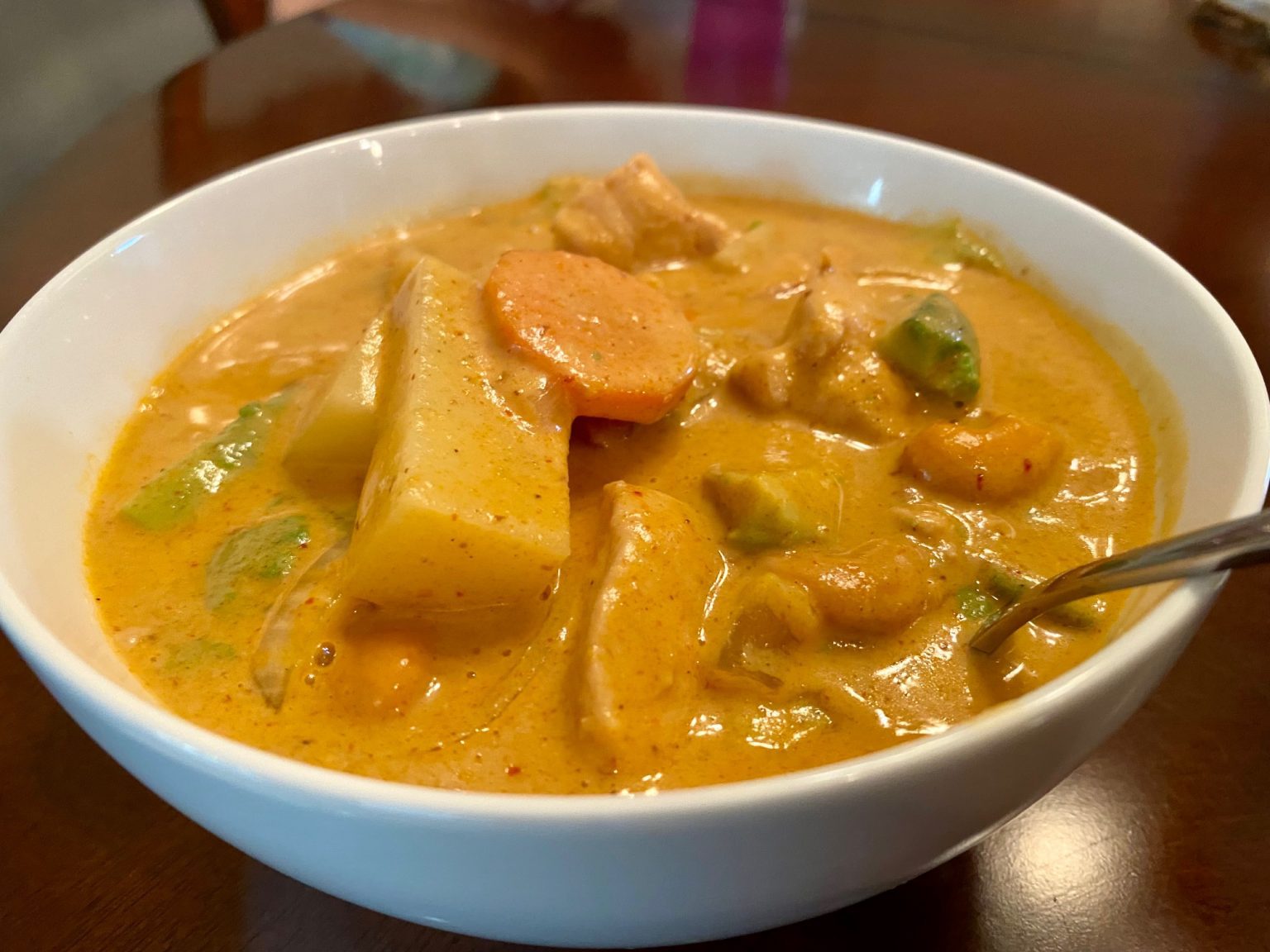
One of my absolute favorite Thai dishes is Massaman Curry. If you’ve never had it, picture a rich, mild, and savory-sweet masterpiece usually loaded with tender, braised chicken or beef. Unlike its more fiery cousins, red and green curry, which routinely threaten to melt my tastebuds — Massaman relies on warm spices and a beautiful sweet-sour balance. It’s pure comfort food.
However, I recently learned a bit of food trivia that blew my mind: Massaman curry didn’t actually originate in the Land of Smiles.
It is, in fact, Persian in origin.
Way back in the late 1600s, Muslim merchants introduced the dish to the royal court of the Ayutthaya Kingdom. In a stroke of culinary genius, Thai chefs took those warm Middle Eastern spices — like cardamom, cinnamon, cloves, and cumin — and married them with indigenous Thai staples like lemongrass, galangal, and coconut milk. The result was a masterful fusion of flavors — the very thought of which has me salivating all over my keyboard.
Pad Thai: It’s Not as Thai as You Think
You would think a dish literally named Pad Thai would be as native to Thailand as it gets, right?
Nope. Prepare to have your culinary worldview shattered.
Unlike most iconic dishes that naturally evolve over centuries in a family kitchen, Pad Thai actually originated in a government office. Well, sort of.
Back in the late 1930s, Prime Minister Plaek Phibunsongkhram wanted to modernize, Westernize, and unify the country under a fierce “Thai first” national agenda. (Fun fact: This is actually the exact moment the country’s name officially changed from Siam to Thailand).
But back to the food.
Facing severe wartime rice shortages, the government started heavily promoting rice noodles, which were cleverly made from cheap, broken rice grains. There was just one glaring problem: stir-frying noodles was a distinctly Chinese technique.
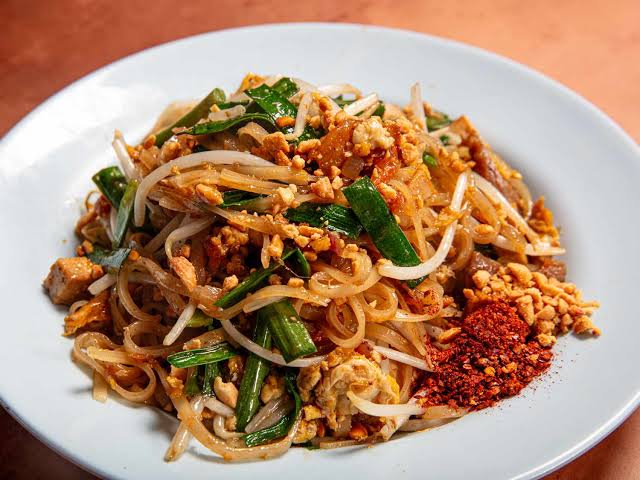
To forcefully detach the dish from its Chinese roots and make it aggressively “Thai,” the government mandated a state-approved recipe packed with local flavors: tamarind, palm sugar, dried shrimp, and chilies. They even explicitly banned pork from the original recipe because it was viewed as a Chinese meat.
The result of this strict government propaganda? The delicious, sweet-and-tangy Pad Thai we know today. It turns out, the ultimate comfort food was actually a brilliant political PR campaign — proving that sometimes, bureaucracy actually tastes delicious.
Chilis – The New World’s Hottest Souvenir
No question, Thai food is some of the tastiest food in the world. It is also some of the spiciest. So it might surprise you to learn that chilis did not even originate in Thailand.
Before Christopher Columbus set sail for the New World in 1492, chilis existed exclusively in Central and South America. Not even the iconic Bird’s Eye Chili is native to Thailand. Its roots go straight back to the Americas. Before the Portuguese came along — bringing their chilis with them — Thai cooks had to rely on black pepper and long pepper to serve an endorphin rush.
A Geography Lesson – The Regional Divide
Treating Thai food as a single, uniform cuisine is like saying European food is just variations on a potato. Over the last few months, my tastebuds have been thoroughly schooled. I’ve learned that the culinary landscape here completely changes the moment you travel from one province to the next.
You have the gentle, aromatic herbs of the mountainous North, the deep, rich sweetness of Central Thailand, the fiery, seafood-heavy curries of the South, and the sticky-rice-fueled punch of Isan in the Northeast. It’s not one cuisine; it’s a collection of distinct, delicious kingdoms.
What is popular in one region may be very hard to find elsewhere. Take Khao Soi, for example. My tour guide in Chiang Mai insisted that it was the one dish I absolutely, positively had to try. And she was right — it was amazing! But once I left northern Thailand and moved to Hua Hin, I found the dish much, much harder to find.
This is due partly to culture, partly by geography. Ingredients that are indigenous to one part of Thailand may not be as popular elsewhere. For instance, you won’t find much beachfront property in eastern Thailand — hence less seafood. (But trust me, Isan more than makes up for it with it with their sticky rice.)
North to South, East to West, you will find that Thailand is not home to just one cuisine. Instead, you will find four distinct culinary kingdoms under one flat.
As you from traveling with me, I love a good story. And some of the stories surrounding Thai food are simply delicious.
Take the tale behind the 9 Auspicious Thai Desserts. (The name itself is a mouthful.)
Thailand’s Royal Desserts – Portugal Performs an Encore
You’ve seen pictures of them: half sculpture, half dessert. These beautiful golden treasures are famous for their meticulous preparation, vibrant color, and deep symbolic meaning. But believe it or not, Thailand’s iconic royal desserts actually started as a 17th-century fusion experiment.
It all began when Maria Guyomar de Pinha, a woman of Portuguese descent, took over the royal palace kitchens. As the resident Julia Child of her era, she completely revolutionized Thai sweets. Traditional desserts used to stick to rice, coconut, and palm sugar. Maria brought egg yolks and European techniques to the table, creating legendary golden delicacies like Foi Thong and Thong Yip— where “thong” literally translate to “gold”.
This Ain’t No Thai Cookbook.
Sorry, but you won’t find any recipes here—mostly because my cooking skills are a threat to the local fire department. Nor will you find any “Top 10” lists or boring restaurant reviews.
Instead, this is a space to explore the incredible history, regional quirks, and amazing cultural stories behind the dishes I have come to love.
Because in the Land of Smiles, a meal is never just about the flavor on your plate. It’s about the centuries of trade, migration, royal secrets, and accidental genius that put it there.
See you at the dinner table.
A few of my favorite Thai dishes