
High atop a mountain overlooking the ancient city of Chiang Mai sits one of the most sacred and recognizable temples in all of Thailand: Wat Phra That Doi Suthep. Or, as most people simply call it, Doi Suthep.
Founded in 1383, the temple was built to enshrine a sacred relic of the Buddha. According to local legend, the relic was placed upon the back of a white elephant, which promptly marched up the mountain, trumpeted three times, and collapsed at the very spot where the temple now stands.
Which is impressive enough.
What’s even more impressive is that the elephant apparently made this journey long before there was a road. Meanwhile, I get mildly annoyed when the escalator at the mall is out of service.
For more than 600 years, Doi Suthep has remained one of Northern Thailand’s most revered religious sites. Its golden chedi — the gleaming stupa at the center of the temple grounds — is said to house the sacred relic itself. In the morning sunlight, the entire structure seems to shimmer against the mountain sky like something out of a dream.
And then there are the staircases.
The temple’s famous 306-step climb is lined with enormous Naga serpents — mythical dragon-like guardians whose glittering bodies stretch the entire length of the staircase. The effect is dramatic, elegant, and just a little intimidating.
Gone With the Wind had nothing on this entrance.
Now, I had fully intended to march heroically up all 306 stairs like some rugged explorer from an old National Geographic documentary. About halfway up, however, I began reconsidering several of my life choices. By step 200, I was openly negotiating with my lungs.
Fortunately, for travelers whose spiritual enthusiasm exceeds their cardiovascular conditioning, there is also an electric tram available for 50 baht.
No shame in that game, friends.
However you choose to ascend, the reward at the top is worth every aching calf muscle. The panoramic view of Chiang Mai stretching across the valley below is breathtaking. On a clear day, the city seems to go on forever beneath the haze and mountain mist.
But as beautiful as the scenery is, what struck me most was the atmosphere inside the temple itself.
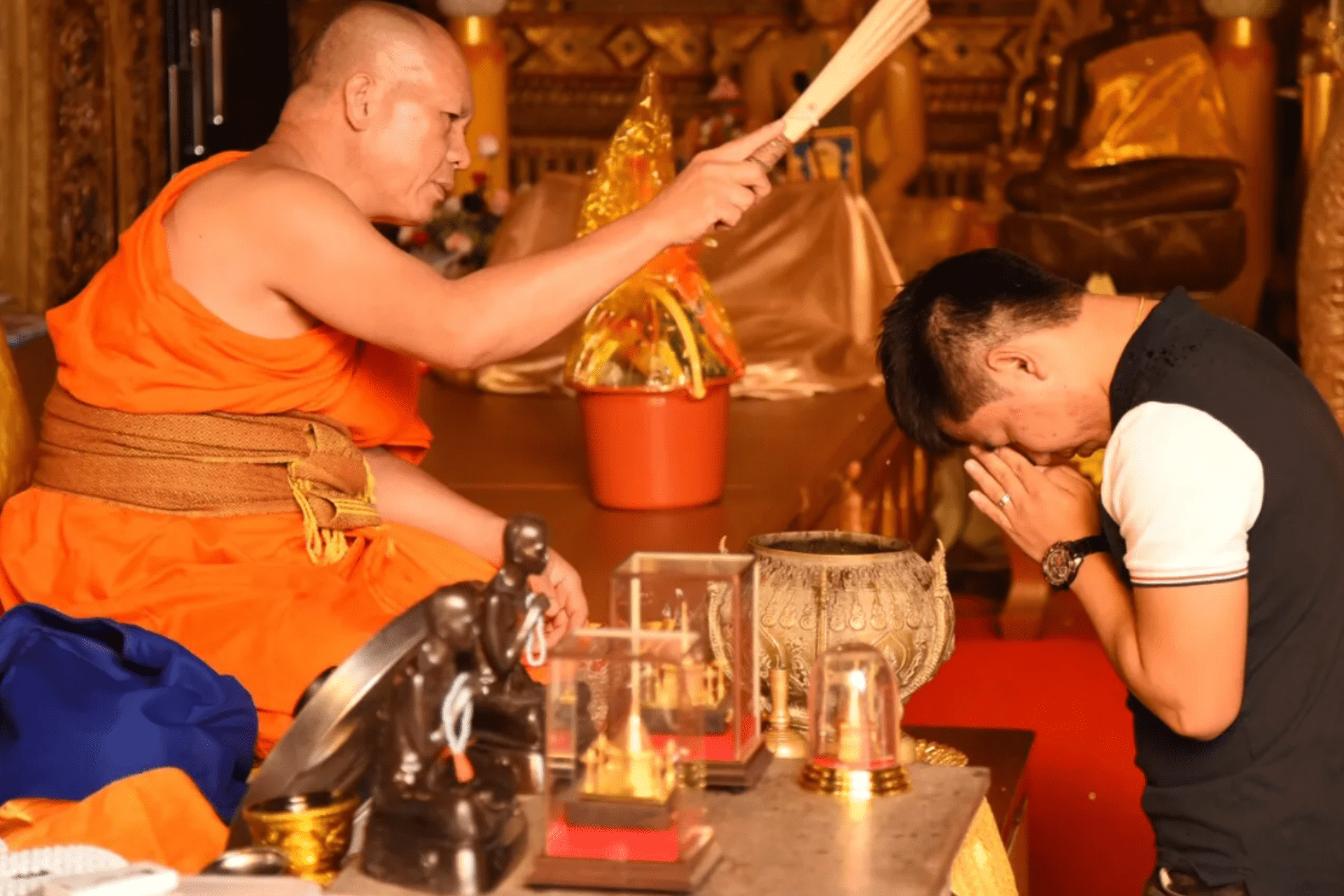
Like many temples in Thailand, Doi Suthep is very much a working temple — not simply a tourist attraction, but a living place of worship. Locals arrive carrying flowers and incense. Monks move quietly through the courtyards. Bells chime softly in the mountain breeze.
I arrived just in time to hear the monks chanting their morning prayers.
The sound is difficult to describe. Part melody, part meditation, part ancient rhythm echoing through the temple walls. The chanting rose and fell in waves, filling the air with something both peaceful and haunting at the same time.
It was one of those travel moments that photographs simply cannot capture.
Later, I had the chance to chat briefly with two young monks who were eager to practice their English. They asked about America, my travels in Thailand, and whether I was enjoying the Chiang Mai weather.
Even monks, apparently, enjoy watching Westerners slowly melt in tropical heat.
After exploring the temple grounds, I decided to hike the trail back down the mountain rather than take a taxi. The path wound through dense jungle past ancient statues, small shrines, and quiet resting places once used by monks making pilgrimage to the temple centuries ago.
It felt wonderfully removed from the modern world.
And speaking of effort, it’s worth noting that the winding seven-mile road leading up the mountain was completed in 1935 in just six months time by thousands of volunteers using little more than primitive hand tools.
Meanwhile, I need to mentally prepare myself to assemble IKEA furniture.
If you ever find yourself in Northern Thailand, a visit to Doi Suthep is absolutely essential. It is equal parts history, spirituality, architecture, and spectacular scenery — the kind of place that lingers with you long after you leave.
And should you happen to encounter a white elephant on the way up the mountain, remember:
They absolutely have the right of way.
Until next time.
More from Doi Suthep temple…