
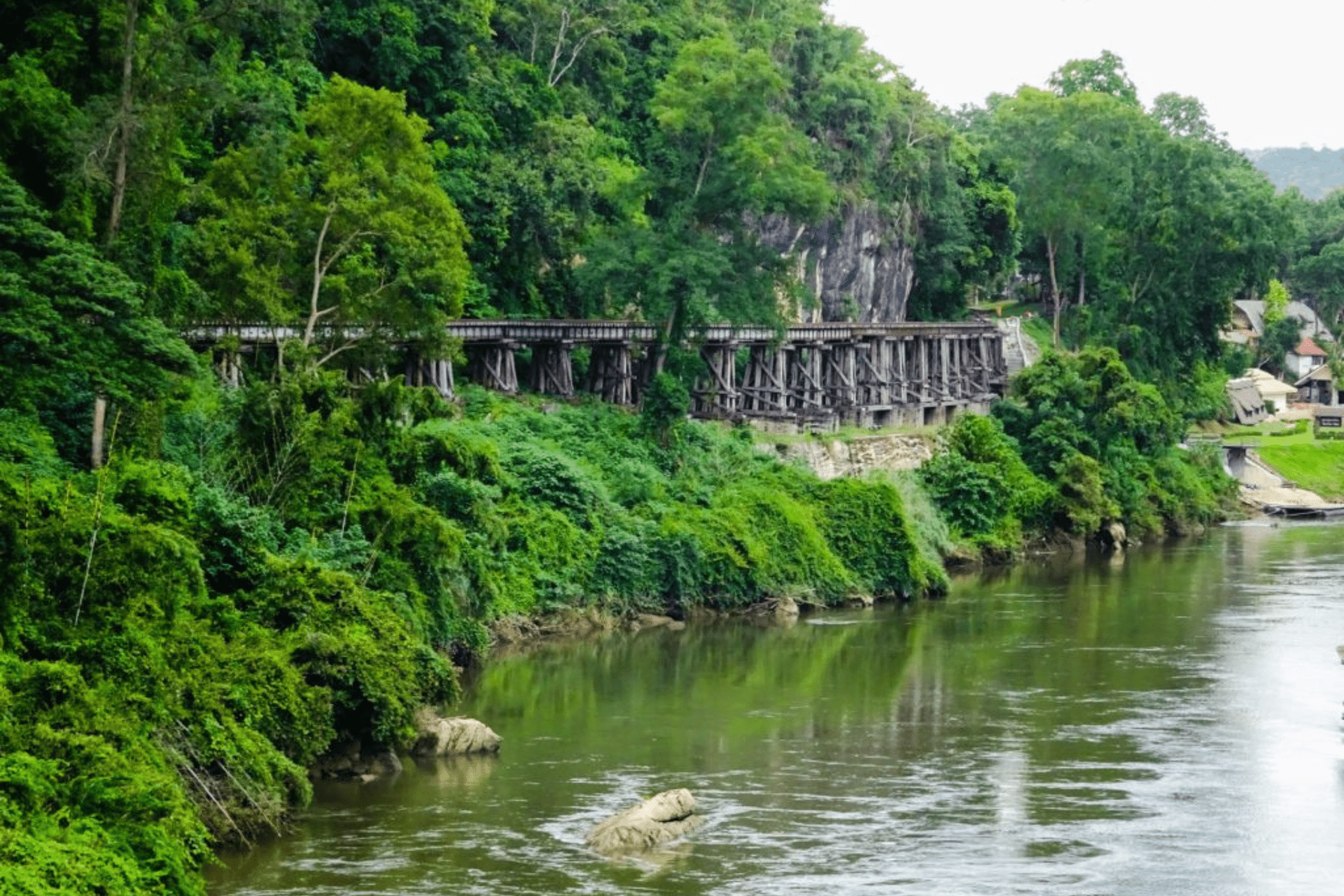
Long before he was Obi-Wan Kenobi, Alec Guinness portrayed Colonel Nicholson in The Bridge on the River Kwai, a role that earned him an Academy Award. The film tells a compelling story set against the construction of the Thai–Burma Railway. Like many Hollywood productions, it captures the drama—but only a fraction of the truth.
The reality is far more sobering.
In 1943, during the height of World War II, Allied prisoners of war—British, Australian, New Zealand, and Dutch—were forced by the Japanese military to construct a 250 mile-long railway stretching from Thailand to Burma (now Myanmar). They were not alone. Hundreds of thousands of Asian laborers, known as Romusha, were also conscripted into the effort.
The task itself was staggering: carving a railway through dense jungle and unforgiving terrain under relentless heat. Armed with little more than primitive tools, many labored with bare hands, cutting through rock, hauling timber, and laying track. Disease was rampant—malaria, cholera, dysentery—and food and medical care were scarce. The workdays stretched endlessly, often reaching sixteen hours or more.
And still, they were expected to finish it all in less than a year.
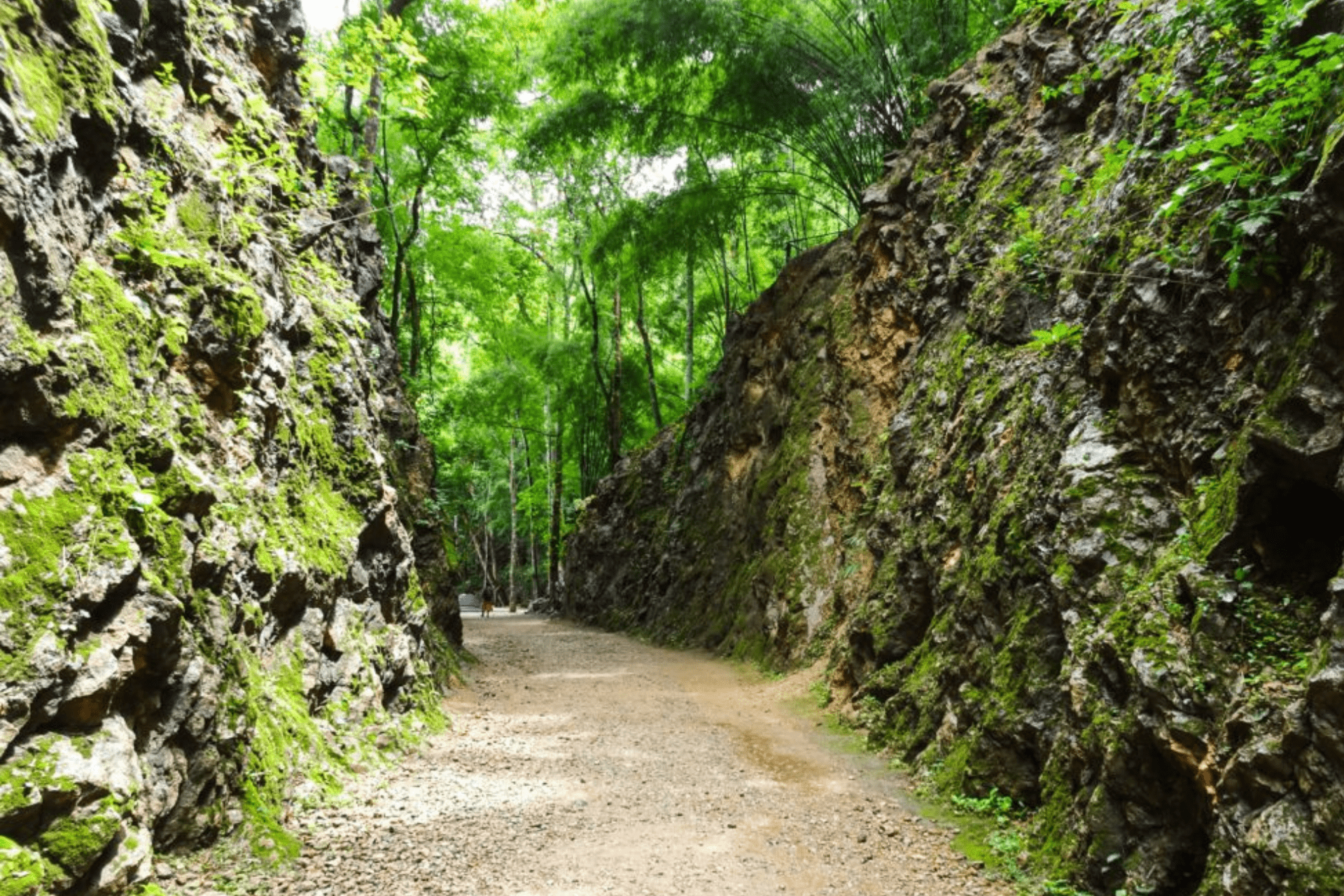
Near present-day Kanchanaburi lies one of the most haunting sections of this railway: Hellfire Pass. Today, it is quiet. Peaceful, even. But that stillness carries weight.
At the nearby museum, photographs line the walls—images of men reduced to skin and bone, yet somehow still standing, still working. It is difficult to comprehend the strength they must have summoned each day. To swing a hammer. To lift a beam. To endure.
Many did not survive. It is estimated that over 12,000 Allied POWs lost their lives during the railway’s construction, along with countless more laborers whose names are largely unrecorded. They are honored at places such as Kanchanaburi War Cemetery, where rows of headstones stand in quiet testimony.
And yet, even in such conditions, there were moments of quiet resistance. Prisoners found ways—small, often unnoticed—to undermine the work forced upon them. It was not defiance in the way we often imagine, but it was courage nonetheless.
Walking through Hellfire Pass is not like visiting most historical sites. There is no sense of spectacle. No grand display. Instead, there is a path—a simple trail through rock that was once cut by hand. As you walk it, you begin to understand, not through words or images, but through presence.
It is a place that asks for reflection.
The visit left me with a heaviness I have carried since. It is a reminder not only of what happened here, but of a broader truth: that the cost of war is measured not in territory or strategy, but in human lives. Sons and daughters who never return. Families forever changed. Suffering that echoes across generations.
I usually end these stories with a note of thanks.
This time, it feels more appropriate to end with something quieter.
A moment of remembrance.
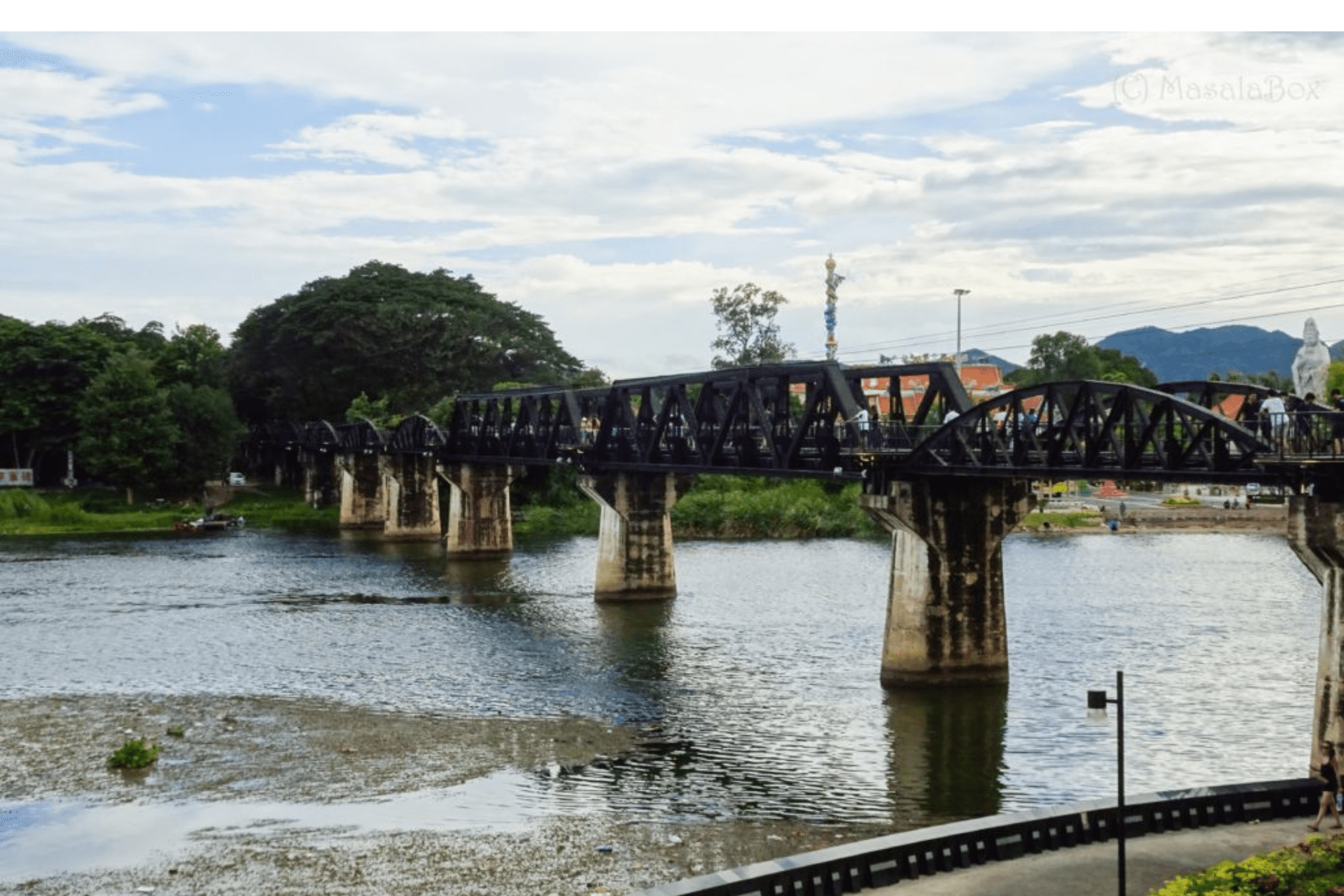
A few images from the Death Railway.

❣️
Daryle,
This touched me in so many ways. We are now sending our bright young generation into a war for nothing. Robin and I grew up in the Vietnam era. We visited the memorial in DC . Seeing all those names was humbling. We have a lady here in Madras whose husband is still missing from that time. We humans are such a warring bunch.
Anyway thanks for the extra information
Maralee
I am pleased to have you and Robin along for the ride, Maralee.
Thank you for sharing this, Daryle. I had, of course, heard of this WW2 story, but this adds details and, yes, stimulates contemplation of the sad and also courageous parts of this world’s story. There is a purpose in it all…
I am glad you enjoyed it, Sheryl.
Wow, that is interesting and yet so very sad how people have been treated in years past. We’d like to think we’re better now but sometimes it doesn’t seem like it.
So very true, Judy.
This post is truly sobering, and remembrance (and hope for peace) is an apt plea, especially in these crazy times. Thank you for reaching back in time to share the history.
You are not going to believe this, but I visited northern Thailand this January (starting in Chiang Mai and venturing further north with a women’s travel group – my first visit to southeast Asia). So, I can totally relate to the wonderful stories you are sharing. Loving it!
I am thrilled to know you are along for the ride, Peggy. Chiang Mai is a wonderful city. I am glad you were not there for the field burning season!
Thanks for sharing in such a way that even I could understand!
I am greatly relieved that Art Club didn’t permanently leave a mark. A tribute to your mental toughness plus the resilience you possess to heal without any scars. And Susie seems to have survived the same challenges.
Made of the right stuff
All the best.
It’s so important to remember these things no matter how sad and difficult. It’s these events that shape us into who we are. Thank you for sharing!
I think you are right about that, Karri. Words like “courage” and “sacrifice” take on a whole new meaning when you visit places like Hellfire Pass.
Some stories, though tragic, deserve to be remembered and preserved for future generations. Thank you for sharing this one, Daryl.
My pleasure, Karen. Thank you for taking the time to read it.