

As a child of the 60s, I grew up watching the Vietnam War unfold from the living room. Nightly news. Grainy footage. Numbers scrolling across the screen that somehow tried to measure something immeasurable.
I remember the protests. The division. The questions that didn’t have easy answers.
And like a lot of kids, I remember thinking—how could anyone endure that?
Years later, halfway around the world, I began to understand.
Just outside of Ho Chi Minh City lies one of the most remarkable—and sobering—reminders of that war: the Cu Chi Tunnels.
“Tunnel” hardly does it justice.
This wasn’t some hidden bunker or improvised shelter. It was an entire underground world—more than 75 miles of narrow passageways that served as homes, hospitals, supply routes, kitchens, and command centers. A place where life carried on… beneath the feet of a vastly superior military force.
If that sounds extraordinary, that’s because it is.
The ingenuity alone is staggering. Hidden entrances. Ventilation systems disguised as termite mounds. Trapdoors, spike pits, and a whole collection of jungle-inspired deterrents that would make even the most confident intruder reconsider their life choices.
This wasn’t just survival.
This was strategy.
During heavy bombardments, fighters lived underground for days at a time—sometimes longer. Conditions were brutal. Air was scarce. Disease was common. Malaria, I was told, claimed nearly as many lives as combat itself.
And yet… they endured.
Standing above ground, it’s difficult to grasp the reality of it. The jungle is quiet. Almost peaceful. You could walk right past an entrance and never know it was there.
Until, of course, someone shows you.
Which is exactly what happened.
At one point during the tour, I was invited—encouraged, really—to crawl through a section of the tunnel myself.
Now, I consider myself a reasonably adventurous person. I’ve eaten things I couldn’t identify. I’ve navigated foreign traffic. I’ve even survived Songkran.
But this?
This gave me pause.
Still, not wanting to back down (a recurring theme in my life), I lowered myself into the narrow opening and began to crawl.
Within seconds, the world changed.
The light disappeared. The air felt heavier. The walls pressed in just enough to make you aware—very aware—of where you were. Every movement required intention. Every breath felt… noticeable.
Claustrophobic doesn’t quite cover it.
I didn’t last long.
Somewhere between “this is fascinating” and “I have made a terrible mistake,” I decided I had experienced quite enough history for one day and made my way toward the faint glow ahead.
I have never been so happy to see daylight.
Back above ground, my guide asked what I thought.
I told him, as calmly as I could, that it was… a tight fit.
He smiled.
Then he said, “We make them bigger for Westerners.”
Of course you do.
And just like that, perspective.
The Cu Chi Tunnels aren’t just a historical site. They’re a powerful reminder of resilience, resourcefulness, and the realities of a war that shaped so many lives—on all sides.
You can read about it. You can watch documentaries.
But until you crouch down, step inside, and feel the walls close in around you… you don’t quite understand.
I know I didn’t.
Until I did.
Until next time.
Going Deeper into Cu Chi Tunnels



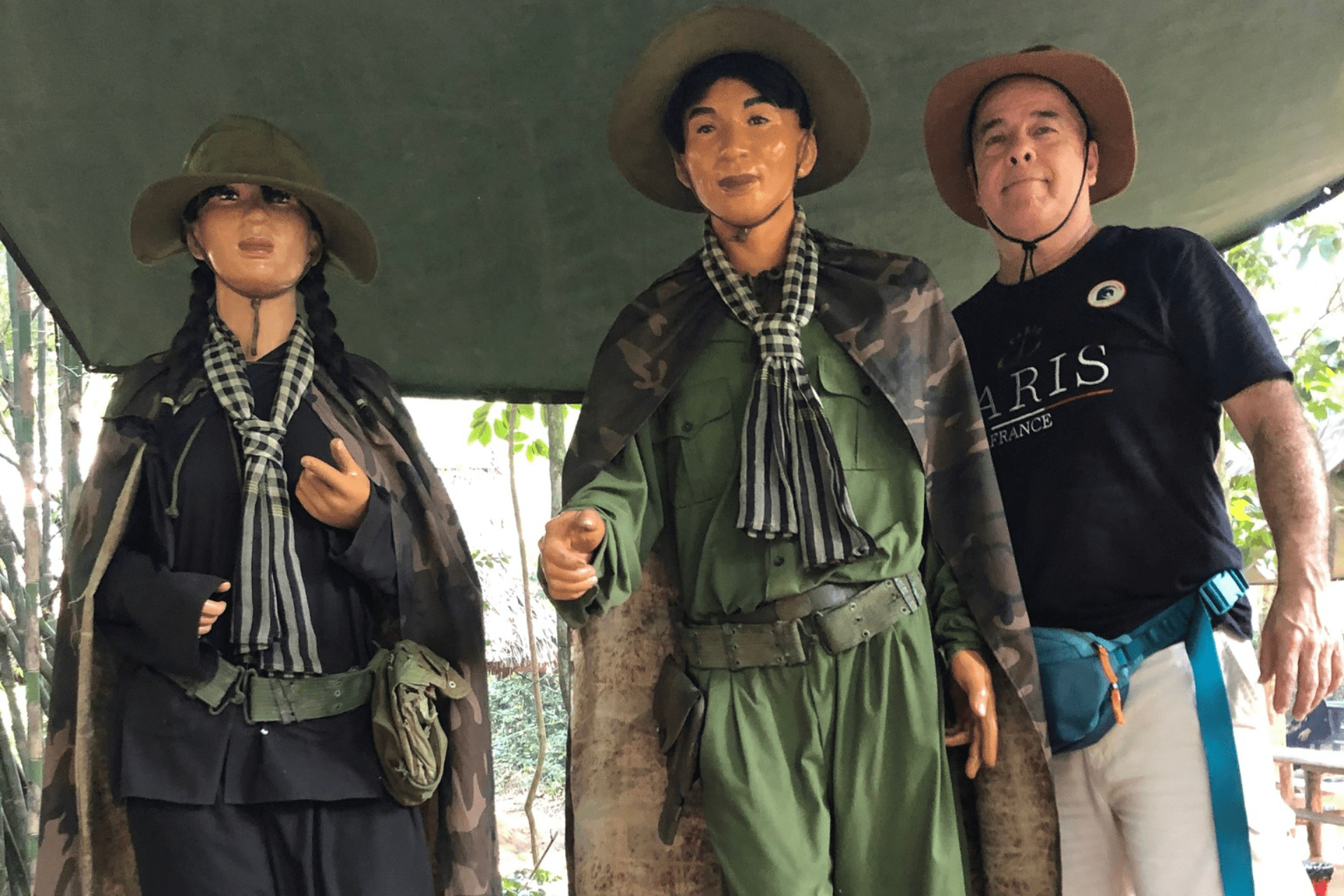
Viet Cong uniforms
Termite Hole or Ventilation Shaft
Staring into Cu Chi Tunnel System
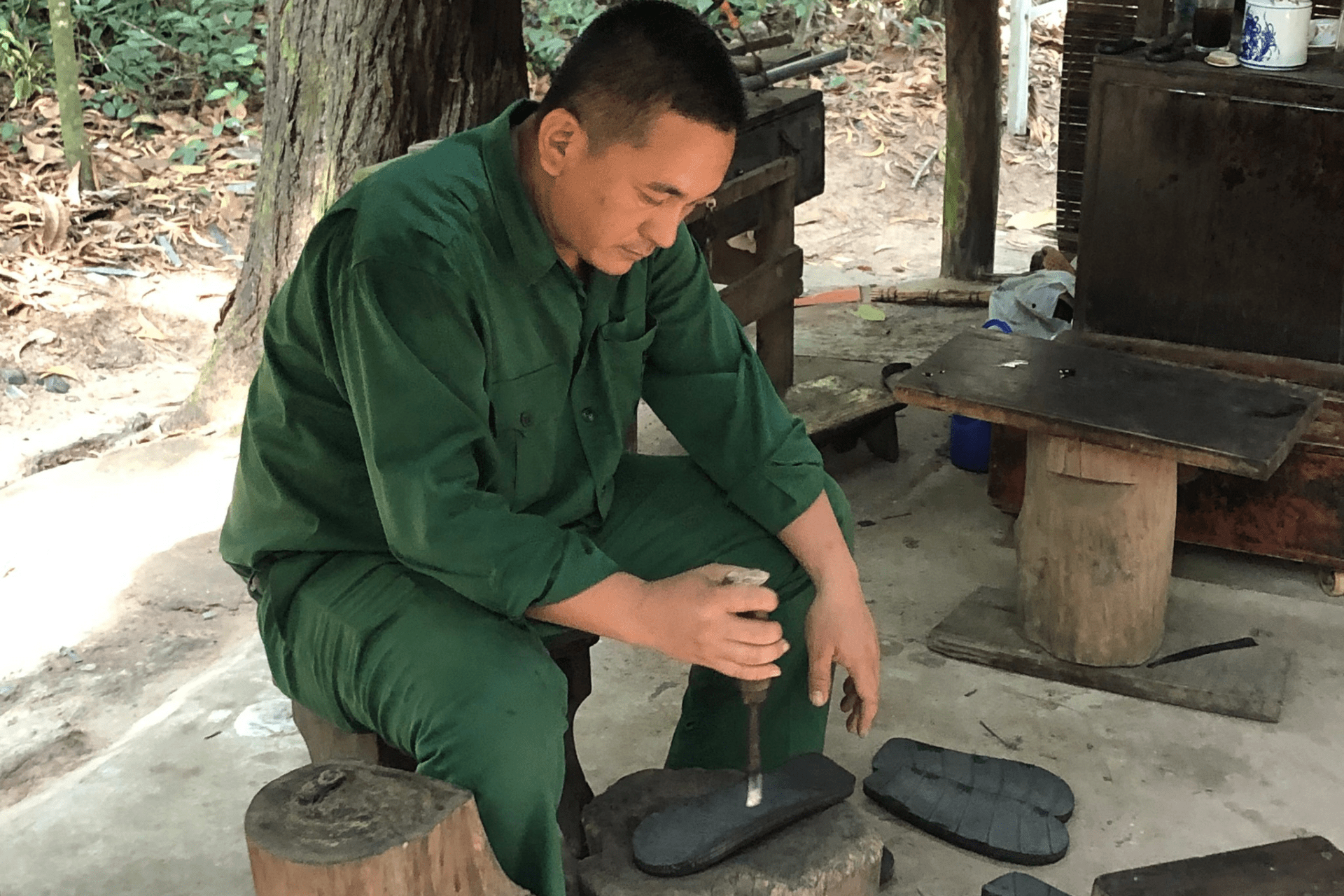
Ho Chi Minh Sandals